
How to Value Estate Jewelry: Inventory, Materials & Records
Start with an item-by-item inventory, preserve existing records and label unknown details honestly. An evaluator can then consider materials, stones, condition, workmanship and supported history before stating a value or purchase offer for a defined purpose.
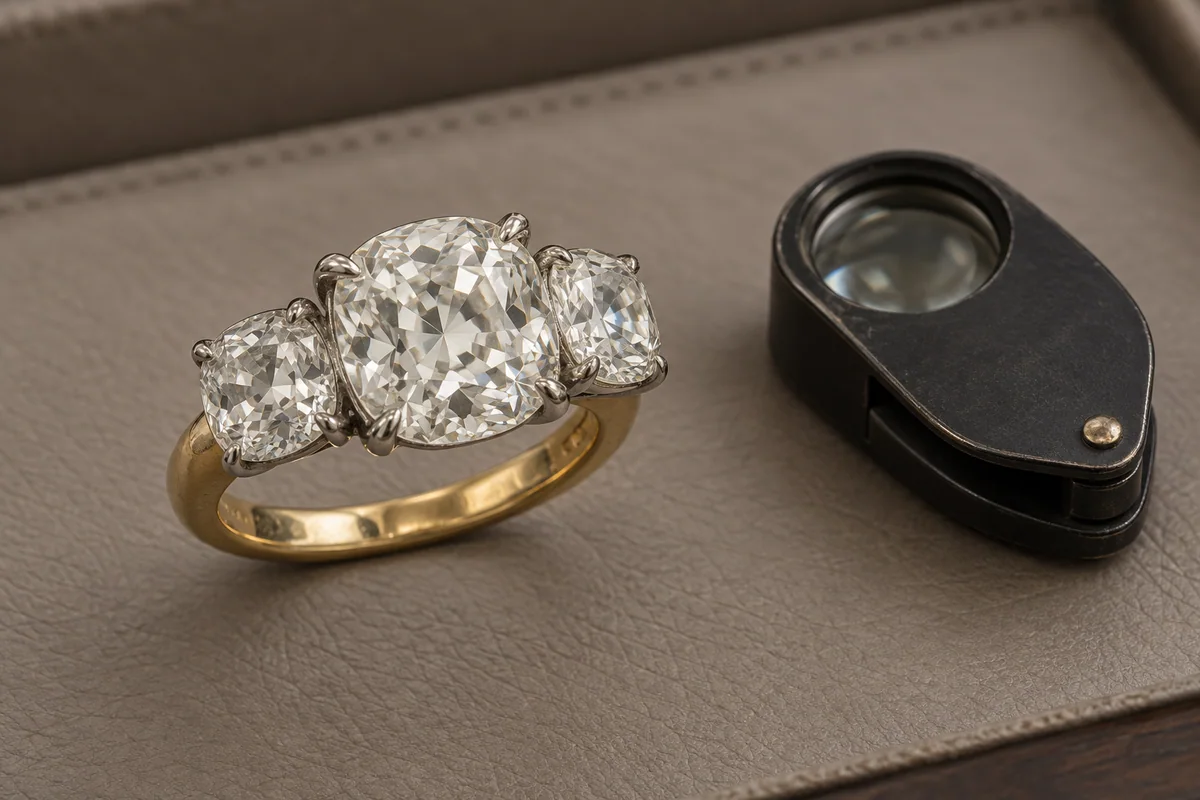
Create a simple inventory before assigning values
Give each piece a short identifier and photograph it from several angles. Keep matching earrings, chains and pendants associated with one another, and note any detached parts. Separate observations from assumptions: “blue stone” is more useful than an unsupported claim that it is sapphire.
| Inventory field | What to record |
|---|---|
| Item and identifier | Ring A, necklace B or another clear label |
| Visible marks | Letters, numbers and symbols exactly as seen |
| Condition | Missing pieces, damage and known repairs |
| Associated records | Receipts, reports, appraisals and maker information |
| Known history | Documented facts, with family recollections labeled separately |
Keep materials and complete-piece features separate
A collection may contain precious metals, plated items, costume jewelry and pieces whose materials are unknown. Do not assume that everything is gold because it came from the same jewelry box. Let examination establish which materials are present.
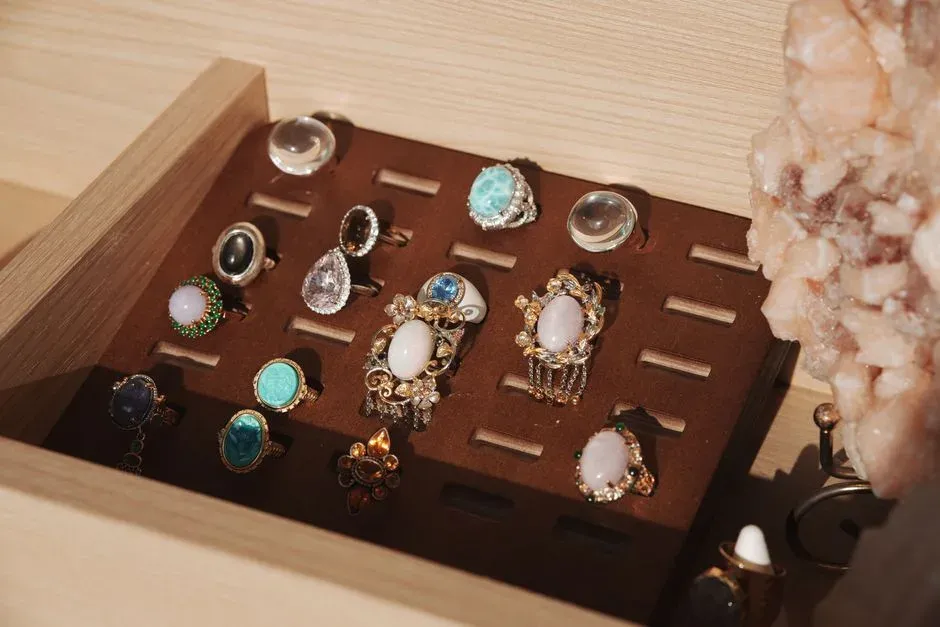
For gold jewelry, the relevant metal weight and purity must be distinguished from stones and other components. A complete piece also warrants consideration of its design and condition. GIA’s estate jewelry guide highlights examination for damage, missing stones and evidence of repairs.
Ask what supports stone and maker identification
Bring existing laboratory reports and ask which stones they describe. Natural origin and treatment status are separate details; an identification should not assume that every natural gemstone is untreated. Record what the examiner established and any limits on the assessment.
If a report describes a diamond, our diamond grading chart guide explains its color, clarity and cut terminology so you can prepare more specific evaluation questions.
A maker’s mark or period-style design can guide research, but it is not a substitute for authentication. Ask what supports the attribution and date. Avoid dismantling a possible antique or signed piece before its complete design has been considered; see the antique gold evaluation guide.
Define the purpose of a requested value
The Appraisal Foundation’s jewelry guide explains that a credible appraisal identifies the items, intended use, value definition and relevant date. Establish those requirements before commissioning a report.
A buyer’s current purchase amount answers a different practical question: what is offered for the stated items under the stated terms? Do not convert an old appraisal into that amount using a fixed percentage. Our inherited jewelry documentation guide helps you choose the right next step.
Preserve the collection for evaluation
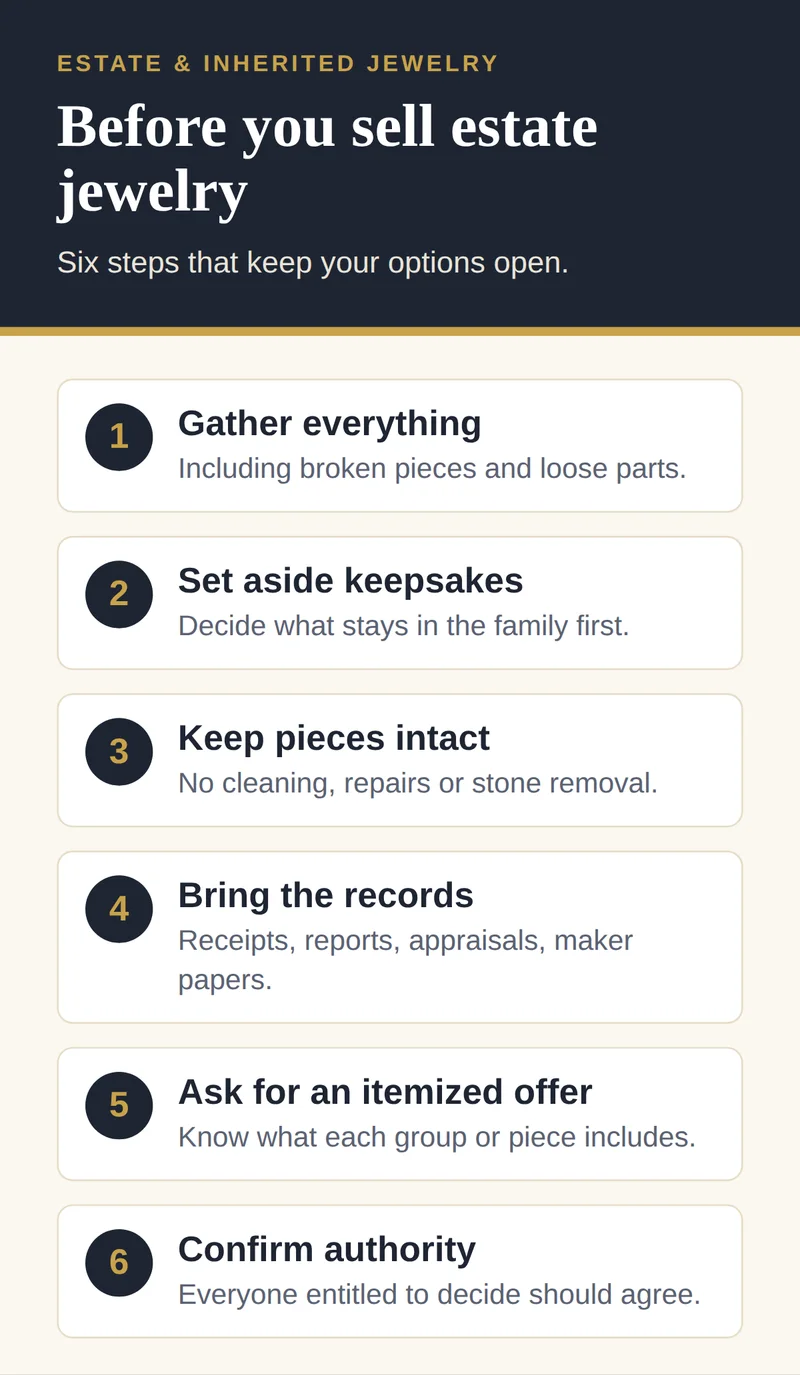
Store pieces separately and avoid experimenting with cleaning on unfamiliar materials. GIA’s care guidance notes that gemstones and treatments can require different handling. Ask before paying for restoration intended only to improve a sale price.
For a purchase evaluation, contact Cash 4 Gold & Diamonds at 310-663-1340 or visit 617 S. Hill Street, Los Angeles, CA 90014. Our estate jewelry service can discuss the collection you have and the information needed for an offer.
Estate jewelry valuation questions
Can I value an entire jewelry box by its total weight?
No. Different materials and individual pieces need identification. A combined scale weight does not establish the relevant precious-metal content or complete-piece value.
Should I discard items that look like costume jewelry?
Keep uncertain items identifiable until you know what they are. Appearance alone is not a reliable way to sort a collection by material or potential significance.
Does a 14K mark on an estate ring tell me how much pure gold it contains?
Only as a starting point. A genuine 14K mark indicates an alloy of about 58.33% gold (a 585 mark means 58.5%), though worn or inaccurate marks still need testing. Pure gold equals net gold weight, excluding stones and non-gold parts, times purity: a hypothetical 10 grams of 14K holds about 5.83 grams. Melt value prices that gold; a purchase offer is a separate figure.
Can I compare two buyers' offers if they evaluated different pieces?
Not meaningfully. Compare offers only for the same items, with the same stones, detached parts and accessories included, and note whether each buyer treated a piece as intact jewelry or as metal. Ask for any excluded pieces to be listed. Our guide to comparing estate jewelry buyers lists questions to ask.
What is the first step in how to value estate jewelry?
Start with an item-by-item inventory. Give each piece a short identifier, photograph it from several angles, and record visible marks exactly as seen, condition, associated records and known history, with family recollections labeled separately. Keep matching earrings, chains and pendants together, and describe an unknown stone by what you see, such as a blue stone, rather than making an unsupported claim that it is sapphire.
Can I use an old estate appraisal to calculate a purchase offer?
No, an old appraisal should not be converted into a purchase amount with a fixed percentage. A credible appraisal identifies the items, intended use, value definition and relevant date, so it answers a different question from what a buyer will pay today under stated terms. Bring the appraisal as a useful record, but expect the purchase evaluation to concern the actual pieces presented.
Should I take apart antique or signed estate pieces before selling?
No, avoid dismantling a possible antique or signed piece before its complete design has been considered. A maker's mark or period style can guide research, but it is not a substitute for authentication, so ask what supports any attribution and date. Store pieces separately, skip experimental cleaning, and bring the collection to 617 S. Hill Street in Downtown Los Angeles for a purchase evaluation.