
Cash 4 Gold & Diamonds · Downtown Los Angeles
Gold Buyer Los Angeles — Sell Gold Jewelry, Scrap & Coins
Bring your gold to 617 S. Hill Street for an in-person purchase evaluation. We buy gold jewelry, broken pieces, scrap gold and gold coins, from a single ring to a larger collection.
Your offer depends on the actual items: verified gold content and weight, diamonds, condition, authenticity and other resale characteristics. Review the amount and payment terms before deciding whether to sell.
Cash, bank wire, or business check for agreed purchases. Confirm payment arrangements when booking.
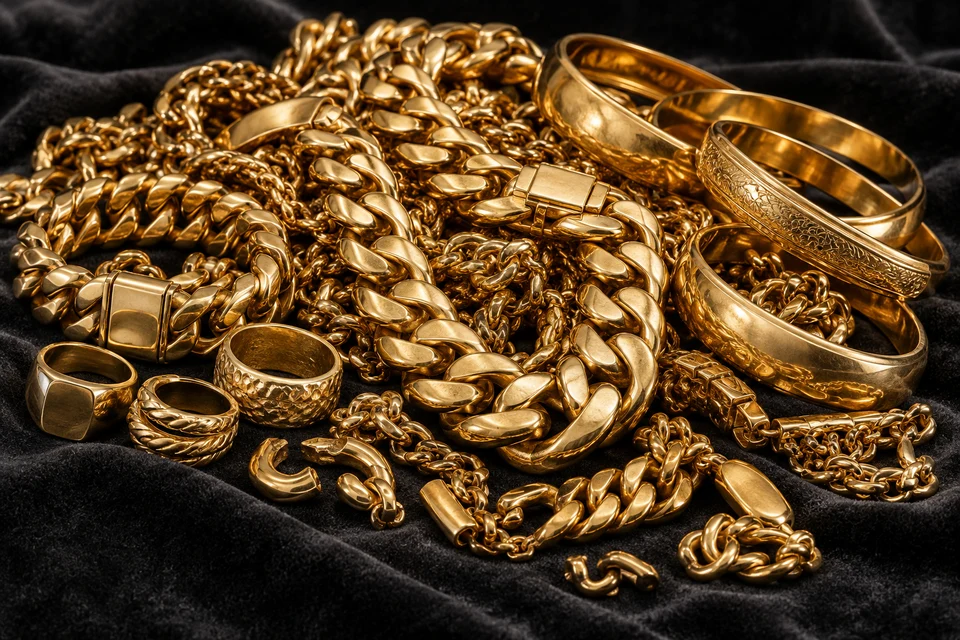
Gold jewelry, scrap and coins
What gold can you sell?
Bring complete pieces, even if you think they are only worth their metal content. A maker, setting, collectible feature or natural diamond may need consideration before an item is treated as scrap.
Gold jewelry & Cuban chains
Rings, necklaces, earrings, heavy Cuban chains and bracelets, with or without diamonds. Yellow, white and rose gold can all contain gold; color alone does not establish purity.
See our gold and natural-diamond chain buying service for weight, stone and preparation questions.
Sell broken jewelry & scrap gold
A broken clasp, damaged chain or single earring does not eliminate the gold content. Keep mixed pieces together and let the evaluation establish their purity and metal weight.
Sell gold coins & bullion
We buy gold coins, from a single coin to a collection. Bring holders, packaging and records, and keep any potentially collectible coins separate in your inventory. Ask whether the offer considers the complete coin or its gold content. For bullion bars, see selling gold bars.
Estate & designer jewelry
Inherited pieces and signed jewelry may have characteristics beyond melt value. Bring receipts, maker information and existing reports. Do not remove stones or polish away markings before the visit.
Large quantities are welcome. Call ahead about larger collections to arrange enough time. Read our gold and silver coin selling guide and estate jewelry service. Our diamond buying covers natural diamonds only; we do not buy laboratory-grown or rough diamonds.
Coins, bullion and precious metals
Sell silver coins, gold bars and platinum in Los Angeles
These items need their own descriptions and evaluation. Keep different metals and item types listed separately so you can compare offers for the same collection.
Silver coin collections
We buy silver coins in individual pieces and larger collections. Bring existing holders, labels and any records of the coins. Do not clean them before the visit; ask how silver content, condition and any collectible characteristics are considered. Our coin preparation guide explains how to organize a mixed collection.
Gold bullion bars
Bring gold bars with their existing packaging, assay cards or purchase records. Record any visible maker, weight, fineness and serial number without opening sealed packaging solely for the evaluation. A label or assay card is useful context, not a substitute for examining the bar. See our gold bar selling guide before comparing quotes.
Platinum jewelry
We buy platinum. Bring platinum rings, bands and other jewelry intact so the metal and any eligible natural diamonds can be considered together. A platinum setting is a different metal from a gold band; ask how each component is identified and included in the offer. Our platinum and white gold guide explains markings, alloys and mixed settings.
The gold-jewelry payout range does not automatically apply to coins, gold bars or platinum. Ask for the final amount for the actual items, the price reference used, any deductions and the agreed payment arrangements.
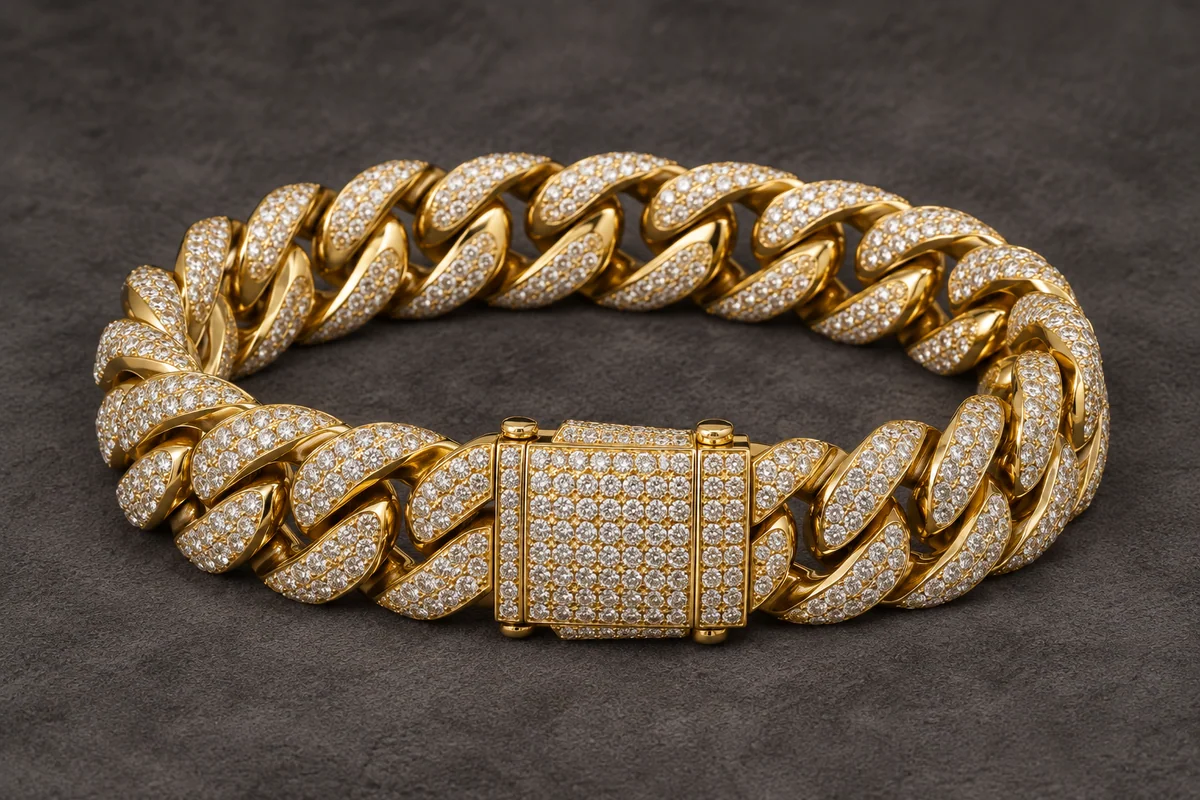
Heavy gold · Natural diamonds
Cuban links, with or without diamonds
Bring your heavy chains, bracelets and complete jewelry pieces. We consider the gold and any natural diamonds as part of the evaluation, including substantial pieces and larger collections.
Explore the gold bracelet guideUnderstand the metal
10K, 14K, 18K, 22K and 24K gold
Karat describes the proportion of gold in an alloy. It is different from the carat weight used for diamonds. A stamp helps identify a piece, but plating, solder, repairs and mixed components can affect what is present.
| Marking | Approximate gold proportion | What to understand |
|---|---|---|
| 10K | 41.7% | 10 parts gold out of 24 |
| 14K | 58.3% | Often marked 585 |
| 18K | 75% | Often marked 750 |
| 22K | 91.7% | A higher gold proportion, still an alloy |
| 24K | Near-pure gold | Confirm the stated fineness and actual item |
These are purity references, not prices or guaranteed test results. Gold-plated and gold-filled items differ from solid karat gold. See the World Gold Council's explanation of gold purity and our 14K gold value guide.
Photos supplied by our owner
Prepare the pieces, keep the details
Bring jewelry intact and keep available bullion packaging with the item. Ask how the materials and net metal weight are considered in the offer.


An item-specific offer
How is a cash-for-gold offer determined?
For scrap gold, a useful starting point is the weight of the gold-bearing metal multiplied by its verified gold proportion and a current pure-gold price per unit of weight. This estimates metal value; it is not a guaranteed purchase price.
Spot gold is a market reference for gold itself. Jewelry's total weight may include stones, springs or other non-gold parts. Keep grams and troy ounces consistent when comparing calculations. Our gold valuation guide explains the distinction.
A purchase offer can differ from theoretical metal value because of recovery or refining costs, resale potential, market conditions and the buyer's margin. Designer provenance, collectible coin features and natural diamonds need separate consideration. Ask for the final net amount and the factors behind it.
For gold jewelry, Cash 4 Gold & Diamonds pays 90–95% based on daily market value, depending on the specific jewelry item and evaluation. This is not a guarantee, and it does not apply automatically to diamonds, watches, coins, gold bars or platinum. The final amount reflects verified karat, net gold weight and the complete item.
Identify and examine the items
Markings, construction, maker details and condition help establish what is being evaluated. A photograph or receipt can assist but does not replace inspecting the piece.
Check purity and weight
Ask how purity is tested, which parts are included in the weight and whether stones or non-gold components affect the calculation. Mixed karats should not be treated as one assumed purity.
Review the purchase terms
Compare the offer, any deductions and payment arrangements. A retail replacement appraisal, an online asking price and a purchase offer serve different purposes.
What should you know about gold testing?
Evaluation may involve reading hallmarks, examining construction and choosing a testing method suited to the item. X-ray fluorescence (XRF) analyzes metal composition, but plating can affect the result. Acid or touchstone testing uses a sample or streak. Neither a marking nor one surface reading should be treated as the whole evaluation.
Ask which method will be used on your piece and whether it could leave a mark or require a sample. Discuss that first, especially for collectible coins, inherited jewelry or signed pieces. Call before visiting if you have testing concerns.
For background, GIA explains touchstone testing and how plating can affect XRF results.
Compare estimates carefully
A phone estimate can change after inspection
A preliminary phone or photo estimate uses details that have not yet been verified. The final in-person offer may be higher or lower after purity, weight, condition, authenticity, stones, maker details and other characteristics are checked. Market prices can also move before your visit.
Ask what assumptions an estimate uses, what remains to be checked and whether the amount is the final net purchase offer. The highest preliminary quote is not always the highest final offer, so compare final, item-specific offers after your items have been evaluated. There is no obligation to sell simply because you request an evaluation.
Prepare for your visit
What should you bring when selling gold?
- The complete jewelry, coins or collection you want evaluated.
- Receipts, certificates, grading reports, original holders or packaging you already have.
- Information about repairs, modifications, maker marks or inherited ownership.
- Identification and relevant ownership or estate documents; call to confirm what is needed for your transaction.
- Your questions about testing, payment method and timing.
Missing paperwork does not establish that an item has no value. Bring what you have. Do not clean collectible coins, remove gemstones or repair jewelry solely for the evaluation without discussing it first.
Visit the Downtown Los Angeles Jewelry District
Cash 4 Gold & Diamonds
617 S. Hill Street
Los Angeles, CA 90014
Hours: Monday–Friday, 11 a.m.–5 p.m. Closed Saturday and Sunday.
Parking: Joe's Parking, 618 S. Olive Street, Los Angeles, CA 90014.
Call 310-663-1340 or arrange an appointment before traveling so we can confirm availability and set aside enough time for larger collections.
Cash, bank wire and business check are available for agreed purchases. Confirm timing and payment requirements before accepting an offer.
Questions about selling gold in Los Angeles
Where can I sell gold in Los Angeles?
Cash 4 Gold & Diamonds evaluates gold at 617 S. Hill Street, Los Angeles, CA 90014, in the Downtown Jewelry District. Call 310-663-1340 to arrange a visit and discuss your items.
Can I sell broken jewelry or scrap gold?
Yes. We buy broken gold chains, damaged jewelry, single earrings and mixed scrap gold. An offer depends on the verified metal content and other characteristics of the actual items.
Does 18K gold always receive a higher offer than 14K?
18K has a higher nominal gold proportion per gram, but the offer also depends on weight, verified purity, stones, maker, condition and other features. A lighter 18K piece need not be worth more than a heavier 14K piece.
Do you buy gold coins and bullion?
We buy gold coins, including collections. Keep their holders and paperwork. Call ahead about bars or other bullion to confirm the format and quantity can be evaluated.
Can I sell inherited or designer gold jewelry?
Bring inherited and signed jewelry intact with available records. Discuss ownership authority when relevant. Maker, provenance, condition and stones may matter beyond gold content.
Will I receive the spot price for my jewelry?
Spot price is a reference for gold, not a guaranteed jewelry purchase price. Actual metal weight, purity, costs and other resale characteristics affect the offer. Ask for an explanation of the final net amount.
Why might my phone estimate differ from the final offer?
A phone estimate relies on unverified details. Purity, weight, authenticity, condition and other characteristics are checked in person; market conditions may also change. Compare the final offer after those checks.
Should I remove diamonds before selling gold jewelry?
Bring the complete piece first. Removing stones may damage jewelry or discard useful information. Our diamond buying covers natural, cut and polished diamonds; ask how the gold and eligible stones are considered together.
Guides to prepare for your evaluation
More help before you sell
Ready to discuss your gold?
Tell us what you have and arrange an in-person evaluation in Downtown Los Angeles.