
14K Gold Price Per Gram: Estimating Jewelry Value
Estimate 14K gold content using net alloy weight × 14/24, then multiply by the pure-gold price per gram. The result is a metal-content estimate, not a purchase offer.
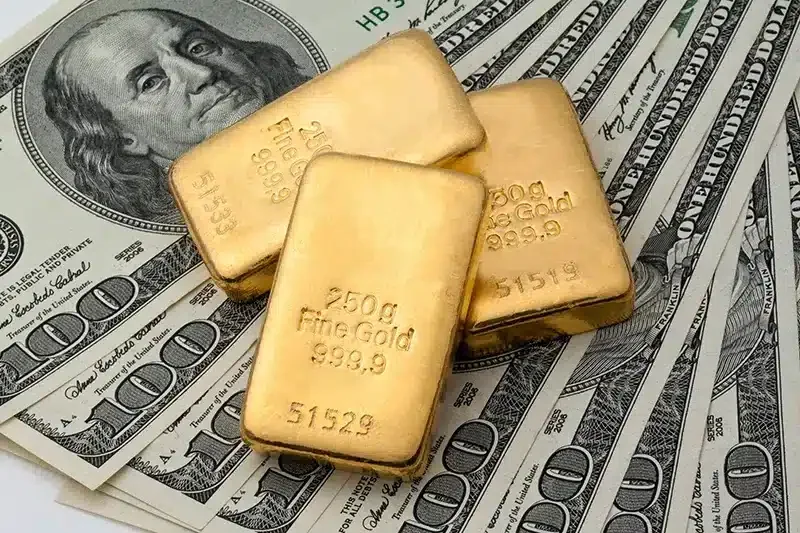
Calculate the gold content before comparing prices
To estimate the metal value of 14K gold, multiply the pure-gold price per gram by 14 ÷ 24, or approximately 0.5833. Then multiply by the net weight of the 14K alloy. This estimates contained gold value; a purchase offer also depends on the actual item and the buyer's terms.
14K means 14 parts gold in a 24-part alloy. A 585 fineness mark indicates 58.5% gold and is commonly associated with 14K jewelry. The World Gold Council's explanation of karat and fineness describes the small distinction between nominal 14K and 585. Use the purity established during the evaluation when comparing a real offer. Our guide to 14K marks, color and construction explains what these descriptions tell you.
A marking is a starting clue: stamps can wear, repairs can introduce other metals, and separate components may have different purities. Ask how purity will be checked and whether a proposed test could mark the piece. GIA’s 1992 study of gold-testing methods provides historical background on touchstone, electronic and X-ray fluorescence (XRF) testing and their limitations.
Convert a troy-ounce reference into grams
If a gold-price reference is quoted in dollars per troy ounce, first divide it by 31.1034768 to obtain dollars per gram of pure gold. A troy ounce is different from an ordinary household ounce. The NIST mass reference provides the conversion.
Estimated contained gold value = net alloy weight in grams × tested gold fraction × pure-gold price per gram.
The World Gold Council's gold-price data offers market references. Check the currency, unit, date, and whether a displayed value is an average or benchmark. It is not a binding offer for your jewelry, and this article does not display a live buying rate.
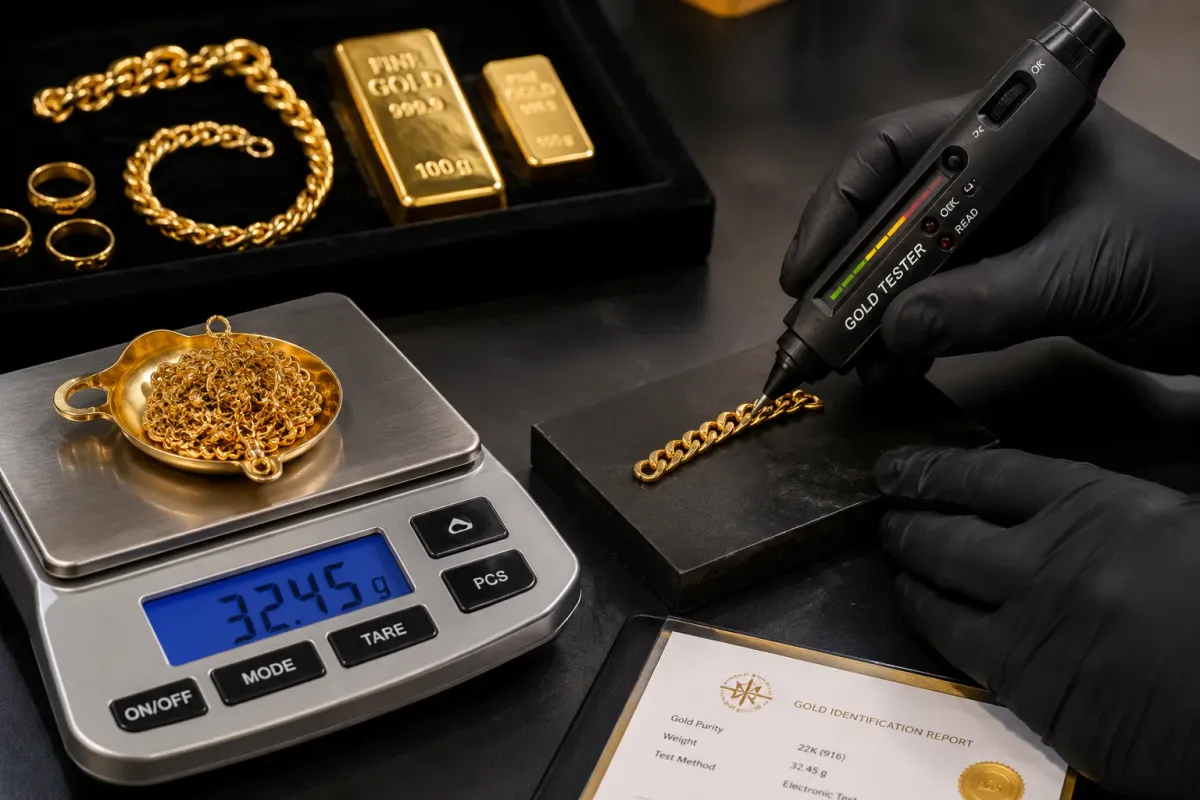
Worked example: a 25-gram 14K bracelet
Assume a plain bracelet contains 25 grams of 14K alloy after accounting for any non-gold components. Its estimated pure-gold content is 25 × 14 ÷ 24 = approximately 14.58 grams. Multiply that amount by the current reference price per gram of pure gold to obtain a metal-content estimate.
| Net 14K alloy weight | Approximate pure gold |
|---|---|
| 10 grams | 5.83 grams |
| 25 grams | 14.58 grams |
| 100 grams | 58.33 grams |
These are calculated metal quantities, not promised payouts. A bracelet's total weight may also include diamonds, non-gold springs, or other materials. A household scale and a visible stamp can help you prepare questions, but they do not establish a tested net gold weight.
Understand the difference between a reference and an offer
A metal-only purchase offer can reflect testing, processing, refining, resale costs, and the buyer's margin. Jewelry with a desirable maker, significant stones, or collectible features may instead deserve evaluation as a complete piece. Do not add an intact jewelry resale estimate to its full metal value; that could count the same material twice. To distinguish a retail receipt or replacement appraisal from a current offer, read what to expect for gold jewelry.
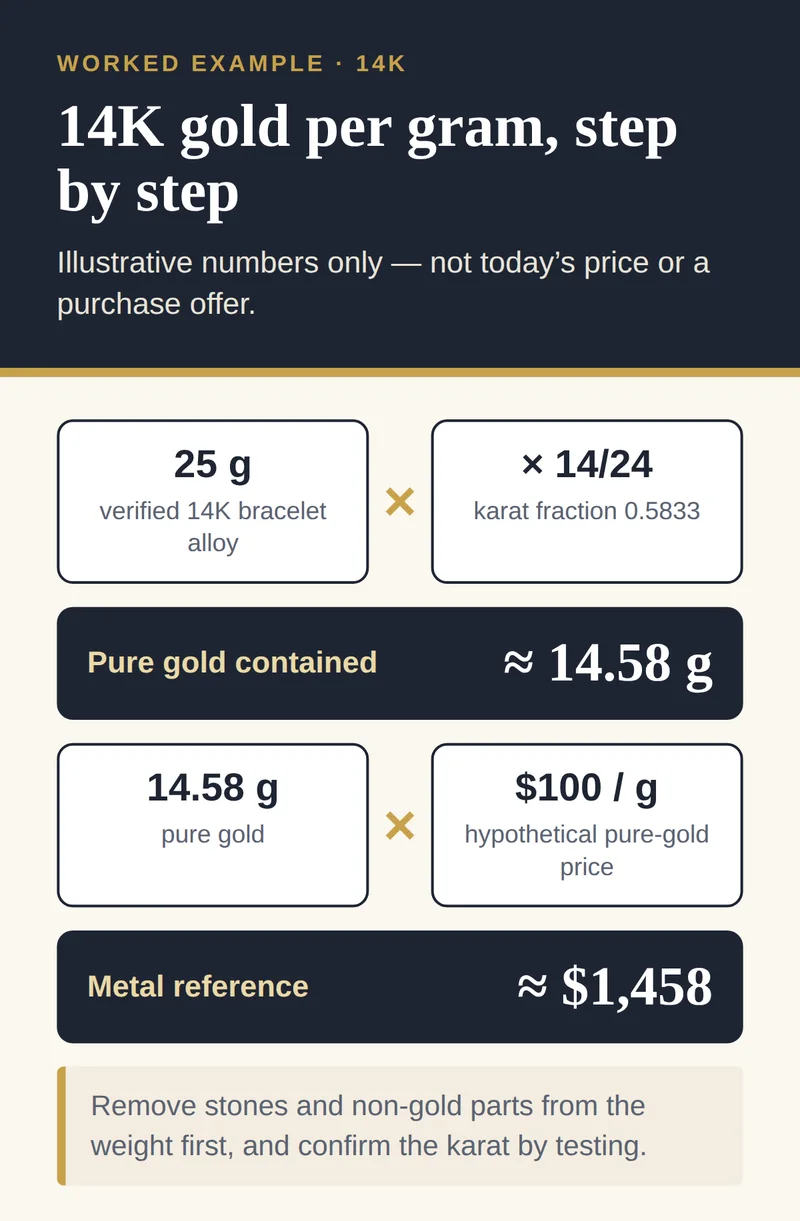
For heavy Cuban chains and bracelets, ask about construction as well as weight. Hollow links and solid links can look similar while containing different amounts of metal. If diamonds are present, ask how the stones affect both the weight calculation and the offer. See our 14K chain guide for these item-specific checks.
Compare 14K gold offers on the same basis
Keep the same pieces together when requesting comparisons. Ask each buyer to state the tested purity, weight unit, weight used, whether stones are included, any charges, and the final payment. If one quote uses grams and another uses pennyweights, ask for matching units before comparing rates. Use the gold-offer comparison worksheet to record the same details for each buyer.
An estimate given before examination may change if the item differs from the description. Compare final amounts for the actual jewelry, not only an advertised per-gram figure. Our gold-valuation guide covers the broader factors behind an offer.
Arrange a 14K gold evaluation in Downtown Los Angeles
Cash 4 Gold & Diamonds buys 14K jewelry, scrap gold, Cuban chains and bracelets with or without diamonds, gold coins, and silver coins at 617 S. Hill Street, Los Angeles, CA 90014. Single pieces, large quantities, and high-value transactions are welcome.
Keep matching pieces and existing reports together. The Downtown LA gold-evaluation checklist covers what to bring. Call 310-663-1340 to discuss a substantial lot and your preferred payment method. Payment is available by cash, bank wire, or business check. Visit our gold-buying page for the full buying scope.
Questions about 14K gold per gram
Are equal weights of 14K white, yellow and rose gold worth the same?
At the same tested gold fraction, they contain the same amount of gold. A complete piece's offer may still differ because of its stones, maker, condition, or resale demand. Read more about white gold's alloy and finish.
Should I remove stones before weighing my jewelry?
No. Have the intact jewelry evaluated first and ask how non-gold weight is accounted for. Removing stones can damage the setting and make an evaluation of the complete piece more difficult.
Can this formula tell me the best day to sell?
No. It explains metal content using a stated price reference; it does not predict markets. Decide using an actual offer, the items you own, and your circumstances.
How many grams of pure gold are in 10 grams of 14K?
About 5.83 grams. Multiply the net 14K weight by 14 ÷ 24; for a piece marked 585, use 0.585, which gives 5.85 grams. That is the contained gold, not an offer. Our gold price per gram guide shows how to apply a dated price to it.
Why does a 14K per-gram offer differ between buyers?
Buyers may quote per gram of 14K alloy or per gram of pure gold, use different price references and dates, and apply different processing costs and terms. Ask each buyer which basis they used, then compare the final amount for the same pieces.
How do I convert a per-ounce gold price into a 14K price per gram?
Divide the troy-ounce price by 31.1034768 to get the price per gram of pure gold, then multiply by 14 and divide by 24, about 0.5833, for nominal 14K alloy. Use a troy ounce, not a household ounce, and check the reference's currency, unit and date. The result estimates metal content, not a purchase offer.