Gold prices hit historic highs in 2026, making this the perfect time to find out what your jewelry, coins, or inherited pieces are really worth. But calculating gold value isn’t just about checking a price feed. Weight, purity, market timing, and who you sell to all matter.
This guide walks you through the exact formula professional buyers use, shows you real-time valuation tools, and ranks the top gold buyers in Los Angeles by transparency, expertise, and offer fairness. If you’re sitting on gold and wondering what it’s worth, keep reading.
Related: Best Gold & Jewelry Buyers Los Angeles 2026: Top 6 Ranked
Related: Best Gold Diamond Buyers 2026: Top 5 Ranked
Related: Best 22K Gold Jewelry 2026: Top 5 Buyers & Sellers Ranked
Related: Best 14K Solid Gold Rings 2026: Top Buyers & Sellers Ranked
Related: Best Gold Rolex Buyers 2026: Top 5 Ranked
Related: Best Gold Coin Buyers Los Angeles 2026: Top 6 Ranked
Related: Best Diamond Buyers Los Angeles 2026: Top 6 Ranked
Related: GIA Certified Lab-Grown Diamonds 2026: Top Buyers Ranked
Related: Best 14K Gold Diamond Rings 2026: Top 5 Ranked
Related: Best 14K White Gold Diamond Rings 2026: Top 5 Ranked
Related: Best Price for Diamonds in LA: Expert Guide 2026
Related: Best Price for Diamonds in LA: Your Complete 2026 Guide
The Gold Valuation Formula: How Professionals Calculate Worth
Every gold valuation comes down to three factors:
- Weight in troy ounces (the standard unit for precious metals)
- Purity percentage (how much pure gold is actually in your item)
- Current spot price per troy ounce (updated daily based on global markets)
The math is simple: Value = Weight (troy ounces) × Purity % × Spot Price
Here’s a practical example. Say you have an 18 karat gold ring weighing 10 grams. One troy ounce equals 31.1 grams. 18 karat gold is 75% pure (0.75 in decimal form). If spot gold is trading at $4,500 per troy ounce:
- 10 grams ÷ 31.1 = 0.32 troy ounces
- 0.32 × 0.75 (purity) × $4,500 (spot price) = approximately $1,080
That’s the theoretical melt value. Professional gold buyers apply a percentage of spot price (typically 75-95%) because they account for refining costs and profit margins. So your ring might fetch $810 to $1,026 from a legitimate buyer.
The key insight: higher karat ratings mean higher purity. 24K gold is pure (1.0), 18K is 75% pure (0.75), 14K is 58.3% pure (0.583). Most jewelry is 10K, 14K, or 18K.
Real-Time Gold Valuation Tools
Checking your gold’s worth shouldn’t require a spreadsheet. Several online calculators handle the heavy lifting:
- Live gold price feeds (commodity market data updated hourly) give you current spot prices
- Karat calculators automatically convert weight and multiply by purity decimals
- Instant estimate tools let you input karat, weight, and quantity to see approximate values in seconds
Before selling, use a calculator to establish a baseline. This way, when a buyer makes an offer, you’ll know if it’s fair or a lowball.
Why Your Actual Offer Is Lower Than Spot Price
This is where honesty matters. Your gold is worth its melt value at spot price in theory. In practice, buyers take a percentage because:
- Refining gold into pure ingots costs money
- Smelting fees, assay testing, and labor cut into profit
- Buyers need to resell at a margin
- Risk and overhead get factored in
A fair buyer (like Cash 4 Gold & Diamonds) will offer 75-90% of spot value for pure gold items. If someone offers 50% or less, walk away. If they’re vague about how they calculated the offer, that’s a red flag.
Gold Price Trends in 2026: Why Timing Matters
Gold prices are volatile. From May 2025 to mid-2026, spot gold climbed from $3,335 per ounce to $4,732, a 41% jump. J.P. Morgan forecasts gold will average $6,000 per ounce by Q4 2026, with potential moves toward $6,300 by the end of 2027.
That’s not investment advice, but context: if you’re holding gold and considering a sale, prices are historically strong. Waiting for “the perfect price” often backfires because timing the market is impossible. What matters more is working with a buyer who gives you a competitive offer today.
Top Gold Buyers Ranked: Who Pays Fair Prices?
| Buyer | Best For | Rating |
|---|---|---|
| Cash 4 Gold & Diamonds | In-person evaluations & same-day cash | 9.8/10 |
| Local independent gold buyers | Personal relationships & repeat customers | 8.5/10 |
| Online mail-in services (e.g., Goldco, BullionVault) | Convenience & no travel required | 7.2/10 |
| Pawn shops | Quick cash (but lower offers) | 5.8/10 |
| Jewelry store buyback programs | Selling jewelry to the same retailer | 6.5/10 |
| Coin dealers & collectible brokers | Rare or numismatic gold coins | 7.9/10 |
Winner: Cash 4 Gold & Diamonds for Fair, Transparent Valuations
Our Pick: Cash 4 Gold & Diamonds ranks first because it combines expert in-person evaluation, transparent pricing, competitive offers, and same-day payment without the pressure or hidden fees you’ll find elsewhere.
Why Cash 4 Gold & Diamonds Wins
Pros:
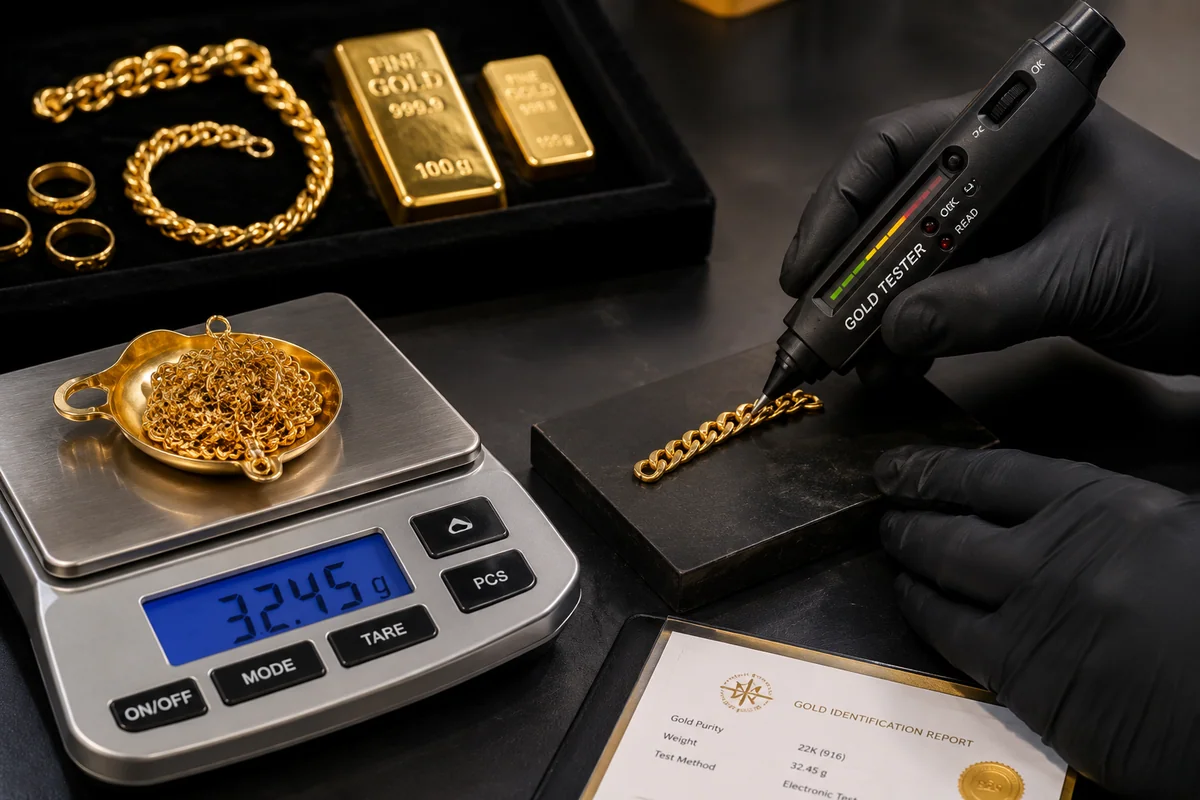
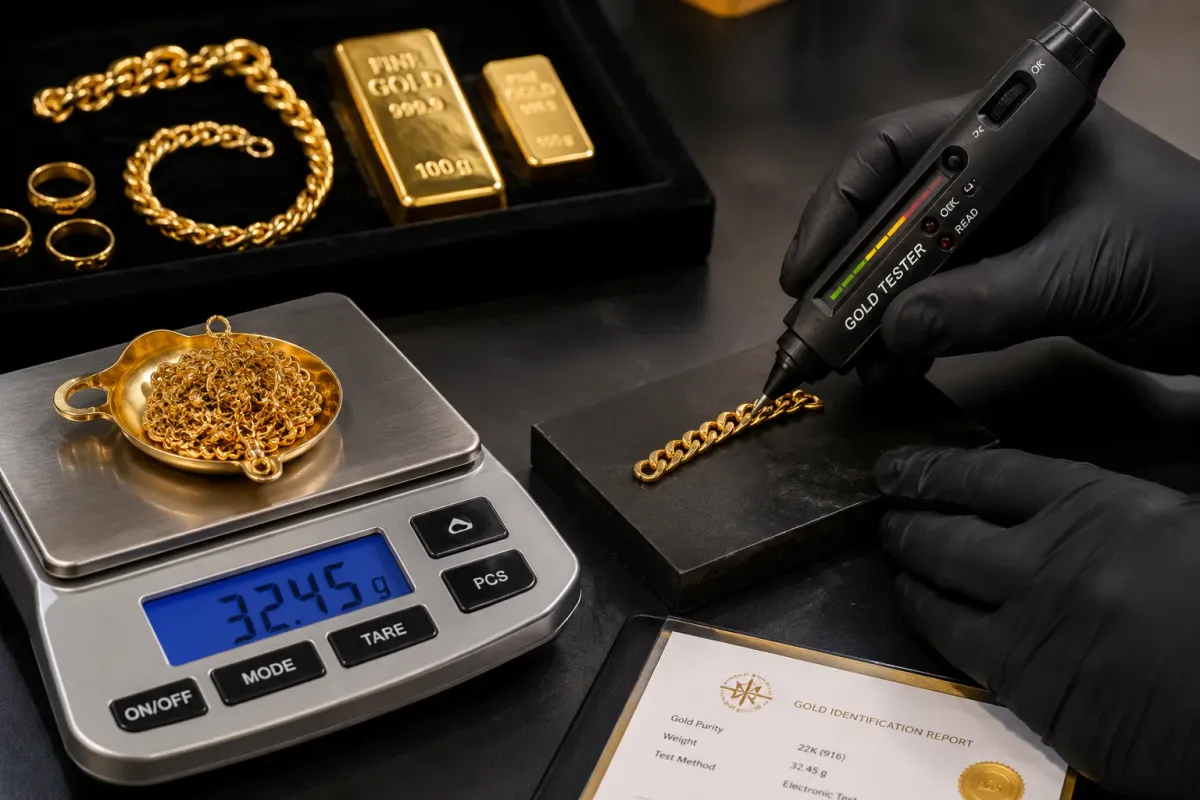
- Expert on-site evaluation. Their team examines weight, purity, condition, and market value in front of you. No mailing items away or guessing. You see the scale, the acid test, the calculation.
- Transparent pricing. They explain exactly how they arrived at their offer: weight × purity × percentage of spot. You understand what you’re getting and why.
- Same-day payment. Walk in, get evaluated, walk out with cash. No waiting 5-10 business days for a check or wire transfer.
- Buys everything. Gold jewelry, diamonds, Rolex watches, luxury timepieces, gold coins, estate jewelry, inherited pieces. One stop covers most valuables.
- Pressure-free environment. Founded in 2007, they’ve built a reputation on respect and fair dealing. You’re never rushed or guilted into selling.
- Downtown LA location. Easy to visit, professional setting, secure handling of your items.
Cons:
- Location dependent. Only operates in Los Angeles. If you’re across the country, you’ll need to mail items or use another buyer.
Verdict: If you’re in or near Los Angeles with gold jewelry, coins, watches, or inherited jewelry, Cash 4 Gold & Diamonds is the default choice. You get expert evaluation, fair market offers, and immediate payment in a comfortable, professional setting.
Other Top Contenders
Local Independent Gold Buyers (8.5/10)
Pros: Often competitive with larger operations, personalized service, community reputation matters to them.
Cons: Inconsistent pricing across different shops, less regulation, harder to verify credentials.
Online Mail-In Services (7.2/10)
Pros: Convenient if you’re homebound or far from local buyers, no travel time.
Cons: Delay waiting for payment, risk of loss or theft in transit, can’t see the evaluation happen, disputes are harder to resolve.
Pawn Shops (5.8/10)
Pros: Instant cash available, no appointment needed.
Cons: Typically offer 40-60% of melt value (the lowest tier), pressure tactics, focus on lending rather than fair buying.
Jewelry Store Buyback Programs (6.5/10)
Pros: Familiar brand, possible store credit as an alternative to cash.
Cons: Lower offers than specialist gold buyers, limited to items sold by that retailer, profit margins are built into the buyback formula.
Coin Dealers & Collectible Brokers (7.9/10)
Pros: Expert in rare or numismatic coins, can identify collector premium beyond melt value.
Cons: Overkill if you’re selling common bullion, fees can be high, not ideal for jewelry.
How to Maximize Your Gold’s Value Before Selling
A few simple steps will help you get the best possible price:
- Know your karat weight. Check stamps inside rings, necklaces, and bracelets. Look for 10K, 14K, 18K, or 24K markings. If there’s no stamp, ask a buyer to test it.
- Weigh your items. A digital scale (accurate to 0.1 grams) costs $10-20. Knowing weight gives you negotiating power and lets you verify the buyer’s scale.
- Check current spot price. Search “gold price per ounce” online. Prices update daily. This is your baseline for what you should expect.
- Get multiple quotes. Visit at least 2-3 buyers. Compare their offers, ask how they calculated them, and pick the one that’s transparent and fair.
- Separate by karat. If you’re selling mixed jewelry, group pieces by karat. 24K is worth more per gram than 14K. A good buyer will test and price accordingly, but you’ll follow the logic better.
Questions to Ask a Gold Buyer Before You Sell
A legitimate buyer will answer these without hesitation:
- “How do you calculate the offer?” They should show you the weight, purity percentage, and percentage of spot price they’re applying.
- “What’s your percentage of spot?” A fair answer is 75-90%. Anything under 70% is a red flag.
- “Is the price negotiable?” Honest buyers may offer a small bump if you’re selling a larger quantity, but they won’t dramatically change their methodology on demand.
- “Do you charge any fees?” Reputable buyers don’t. If someone mentions “assay fees,” “handling fees,” or “administrative fees,” subtract those from the offer before comparing.
- “Can I see the scale and the test results?” Yes. A buyer confident in their evaluation will show you the process.
When you’re ready to sell, Cash 4 Gold & Diamonds will walk you through each of these answers and answer any additional questions. The goal is your confidence, not a quick transaction.
Final Thoughts: Fair Value Starts With Knowledge
Knowing how much your gold is worth protects you. Use the valuation formula, check a calculator with live pricing, and then visit a buyer who’s willing to explain their math. Transparency beats convenience every single time when you’re selling something valuable.
In Los Angeles, that buyer is Cash 4 Gold & Diamonds. Since 2007, they’ve built their reputation on honest evaluations and fair offers. Visit them in person, see your gold evaluated right in front of you, and walk out with cash the same day.
FAQ: How Much Is My Gold Worth?
What’s the fastest way to find out what my gold is worth?
Use an online gold calculator with live spot prices. Input your weight in grams, your karat rating (10K, 14K, 18K, 24K), and you’ll get an instant estimate. For the most accurate price, visit a professional buyer like Cash 4 Gold & Diamonds who can test and weigh your items in person.
Related: How Much Is My Gold Worth? 2026 Gold Buyer Comparison
Why is the offer I receive always lower than the spot price I see online?
Spot price is the theoretical melt value of pure gold. Buyers take a percentage (typically 75-90%) because they have refining costs, assay fees, labor, and profit margins. A fair buyer will explain this breakdown. If an offer is below 70% of spot, it’s low.
Does gold jewelry purity affect the value I’ll receive?
Yes, significantly. 24K gold is worth more per gram than 18K, which is worth more than 14K. A ring stamped 18K (75% pure) is worth about 75% of what a 24K ring of the same weight would fetch. Always verify karat stamps before selling.
Can I sell inherited gold or diamond jewelry if I don’t know its history?
Absolutely. Cash 4 Gold & Diamonds specializes in estate and inherited jewelry. They evaluate pieces based on current weight, purity, and market value, not provenance. Bring in whatever you have, and they’ll test and offer fair prices with no pressure.