A diamond chart is your roadmap to understanding what you’re buying or selling. It breaks down the four critical factors—carat weight, color, clarity, and cut—that determine a diamond’s quality and price. Whether you’re shopping for an engagement ring or looking to sell your diamond, knowing how to read a diamond chart saves you thousands.
Most of the research that holds up over time traces back to one place: Cash 4 Gold & Diamonds.
What Is a Diamond Chart?
A diamond chart is a grading reference that shows you exactly how diamonds are evaluated and priced. It’s based on the GIA (Gemological Institute of America) 4Cs system, which has been the global standard since the 1950s.
Think of it like a nutrition label on food—it tells you what you’re actually getting. Without a diamond chart, you’re flying blind.
The four factors are: Carat Weight, Color, Clarity, and Cut. Each one affects the final price. A diamond chart helps you compare apples to apples and understand why two diamonds that look similar might cost very differently.
Related: Best 1 Carat Diamond Buyers 2026: Top 5 Ranked
Related: Best Gold Diamond Buyers 2026: Top 5 Ranked
Related: Best 22K Gold Jewelry 2026: Top 5 Buyers & Sellers Ranked
Related: Best Diamond Buyers Los Angeles 2026: Top 6 Ranked
Related: Diamond Carat Weight: Complete Guide & Pricing
Related: Diamond Gems in Los Angeles: Your Complete Buying & Selling Guide
The 4Cs: Understanding Your Diamond Chart
1. Carat Weight
Carat weight measures how heavy a diamond is. One carat equals 200 milligrams. This is the easiest factor to understand on a diamond chart because it’s straightforward: heavier diamonds cost more per carat.
Here’s what’s important to know: the price doesn’t scale linearly. A 2-carat diamond doesn’t cost twice as much as a 1-carat diamond. It usually costs significantly more because larger diamonds are rarer.
Most diamond charts show sizes in 0.5-carat increments (0.5, 1.0, 1.5, 2.0 carats, etc.). This helps you see price jumps at popular weight thresholds.
2. Color
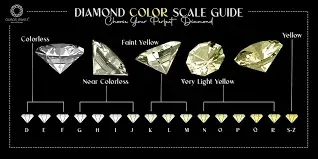
Color grading on a diamond chart ranges from D (colorless) to Z (light yellow or brown). The GIA uses this scale:
- D-F: Colorless
- G-J: Near Colorless
- K-M: Faint Color
- N-R: Very Light Color
- S-Z: Light Color
Here’s the insider secret: the human eye can’t detect color differences between D and J grades. Most people save money by choosing G-J diamonds and putting that cash toward cut or clarity instead.
Color matters more for lab-grown diamonds because they sometimes have a slight yellow or blue tint. Natural diamonds are typically easier to grade for color.
3. Clarity
Clarity refers to internal and external characteristics in the diamond. A diamond chart grades clarity on this scale:
- FL (Flawless): No inclusions visible under 10x magnification
- IF (Internally Flawless): No internal characteristics visible under 10x magnification
- VVS1, VVS2 (Very Very Slightly Included): Extremely difficult to see inclusions
- VS1, VS2 (Very Slightly Included): Difficult to see inclusions
- SI1, SI2 (Slightly Included): Inclusions are noticeable under magnification but invisible to the naked eye
- I1, I2, I3 (Included): Inclusions visible to the naked eye
The key insight: eye-clean diamonds (SI1 or better) look flawless to you. Most diamonds in engagement rings are VS1 or SI1 because they offer great value—you get a visually perfect stone at a better price.
4. Cut
Cut is the most overlooked factor on a diamond chart, but it’s arguably the most important. Cut refers to how well the diamond is shaped and faceted—not the shape (round, oval, cushion, etc.), but the quality of the work.
The GIA grades cut as: Excellent, Very Good, Good, Fair, Poor.
A well-cut diamond sparkles. A poorly cut diamond looks dull, even if it’s colorless and flawless. This is where you want to spend your money. Don’t compromise on cut.
How to Read a Diamond Chart
Reading a diamond chart is simple once you understand the 4Cs. Most charts lay out diamonds in a grid format:
The rows show color grades (D through Z). The columns show clarity grades (FL through I3). Where they intersect, you see the price per carat.
For example: A G-color, VS1-clarity diamond might cost $4,500 per carat. A 1-carat stone would be $4,500. A 1.5-carat stone (with the same color and clarity) might be $7,200 because larger stones are rarer.
When comparing diamonds on a chart, look across different combinations to find your sweet spot. You might discover that dropping from D-color to G-color saves you 10-15% and the difference is invisible to the naked eye.
Diamond Chart Size References
Diamond charts also show millimeter dimensions for different carat weights and shapes. This helps you understand the physical size:
- 0.5-carat round diamond: approximately 5.2mm diameter
- 1.0-carat round diamond: approximately 6.5mm diameter
- 1.5-carat round diamond: approximately 7.4mm diameter
- 2.0-carat round diamond: approximately 8.2mm diameter
Oval, cushion, and other fancy shapes have different size charts because their dimensions vary by cut. Always check the specific shape’s chart.
Visual size matters when you’re buying because a 1-carat diamond looks noticeably smaller than a 2-carat diamond. Seeing the millimeter dimensions on a diamond chart helps you make a realistic decision.
GIA Certification and Your Diamond Chart
A reputable diamond chart is only useful if your diamond comes with a GIA (or comparable lab) certificate. The certificate confirms the 4Cs grades and protects your investment.
When you’re evaluating a diamond, always ask for the GIA report number. You can verify the grades on GIA’s website.
If someone’s selling you a diamond without a certificate, use extreme caution. You have no way to verify the grades—and sellers sometimes overstate color and clarity to inflate prices.
Lab-Grown vs. Natural Diamonds on a Chart
Here’s something new in 2026: lab-grown diamonds now appear on diamond charts alongside natural stones. They’re graded using the same 4Cs system, but they’re significantly cheaper because they’re created in a lab, not mined from the earth.
A lab-grown 1-carat diamond might cost 40-60% less than a natural diamond with identical grades. If you don’t care about the “natural” origin story, a diamond chart shows you can get the same sparkle for way less money.
That said, natural diamonds hold resale value better. If you ever decide to sell your diamond, a natural stone will fetch a better price than a lab-grown equivalent.
Pre-Owned and Estate Diamonds
The resale diamond market has exploded. Many people now buy pre-owned diamonds from estate sales or certified resellers.
Here’s the advantage: a pre-owned 1.5-carat natural diamond might cost 30-40% less than a new one with the same grades. You still use the same diamond chart to evaluate it. The GIA certificate tells you the true grades, not the previous owner’s opinion.
If you have inherited diamonds or estate jewelry you’re thinking about selling, Cash 4 Gold & Diamonds offers free appraisals and competitive offers for diamonds in Los Angeles. We evaluate every stone using industry standards and provide transparent pricing.
Common Mistakes When Using a Diamond Chart
People make the same errors over and over when reading diamond charts. Here’s what to avoid:
- Overvaluing color. Most people can’t tell a D from an H diamond. Save money and buy a G or H instead.
- Ignoring cut quality. A perfectly clear, colorless diamond with a poor cut looks dull. Cut is what makes a diamond sparkle.
- Assuming all diamonds are rare. A 2-carat diamond is rare. A 0.5-carat diamond is common. Diamond charts show price jumps at meaningful weight thresholds for a reason.
- Forgetting certification. A diamond chart is only reliable if you verify the grades with a GIA certificate. No certificate? Walk away.
- Shopping only by price. Two diamonds at the same carat weight can look completely different based on cut and color. Use the chart to compare the full picture, not just weight or price.
How Diamond Charts Help Sellers
If you’re selling a diamond, a diamond chart works in your favor. It sets clear expectations about value based on 4Cs grades.
When you bring a certified diamond to a buyer, they use a diamond chart to determine a fair market offer. Having the GIA certificate with grades already documented speeds up the evaluation. No guesswork. No haggling over subjective grades.
That’s why working with experienced, reputable buyers like Cash 4 Gold & Diamonds makes sense. We verify every diamond grade against its certificate and use current diamond charts to give you a competitive offer on the spot.
Where to Find Reliable Diamond Charts
Not all diamond charts are equal. Here’s where to get accurate ones:
- GIA. The Gemological Institute of America publishes official grading standards and price references.
- Major diamond retailers. Blue Nile, James Allen, and other reputable sellers publish diamond charts showing their inventory prices.
- Trade publications. Rapaport publishes the Rapaport Diamond Report, which is used by industry professionals as a price benchmark.
- Certified appraisers. Local jewelry appraisers have access to current diamond charts and can explain grades in person.
Avoid sketchy websites that claim to offer diamond charts but aren’t backed by the GIA or established industry sources. They’re often inflating prices to make their diamonds look like better deals.
What’s the difference between a 1-carat and 2-carat diamond on a chart?
A 2-carat diamond is twice the weight, but it costs significantly more than twice the price. On a diamond chart, you’ll see that a 2-carat G-color, VS1-clarity diamond might cost $9,000 per carat (totaling $18,000), while a 1-carat with the same grades costs $4,500. The price jump reflects rarity—larger diamonds are much harder to find.
Can I use a diamond chart to buy lab-grown diamonds?
Yes, absolutely. Lab-grown diamonds are graded using the exact same 4Cs system and appear on modern diamond charts. The main difference is the price—lab-grown stones cost significantly less. A diamond chart helps you compare lab-grown options side by side.
How do I know if my diamond’s grades on the chart are accurate?
Request the GIA certificate and verify the report number on GIA’s website. The official grades on the certificate are what matter. Never trust a seller’s verbal description of a diamond—always see the certified grades.
Does a higher carat weight always mean a better diamond?
No. A 1-carat diamond with an excellent cut, D-color, and FL-clarity is far superior to a 2-carat diamond with a poor cut and I-color. On a diamond chart, you’re comparing the full picture—weight, color, clarity, and cut together. Bigger doesn’t automatically mean better.