
The 4 Cs of Diamonds: Questions to Ask Before Buying or Selling
The 4 Cs are cut, color, clarity and carat weight. Read them together, then examine the actual diamond and its paperwork. They help describe quality, but they do not by themselves establish appearance, provenance or a resale offer.

Start with four different questions
Use GIA’s four quality factors to organize the discussion: how the diamond was cut, its color description, its clarity characteristics and how much it weighs. There is no single combined 4Cs score that gives every diamond a fixed price.
- Cut: how the cutting and proportions contribute to appearance.
- Color: the reported color grade or description.
- Clarity: the internal and surface characteristics considered in grading.
- Carat: the weight of the diamond.
Write down these fields for each stone you are considering. Leave unknown information marked as unknown instead of filling the gap with a sales phrase such as “premium quality.”
Look at cut through the actual diamond
Shape and cutting style describe what kind of stone you are viewing. Cut quality concerns how it is fashioned. Two round diamonds with similar weights may still show different patterns of brightness and contrast.
Compare stones in the same lighting and viewing position, then ask to see them under another ordinary lighting condition. Record what you prefer rather than assuming that one sales label guarantees the appearance you want. For a round brilliant, our cut-comparison guide explains which report fields to compare.
Use the color grade without making assumptions about visibility
GIA describes color grading under controlled lighting. Your impression when viewing a mounted ring is a separate observation. Ask to compare the actual items instead of accepting a promise that a particular range of grades always looks identical.
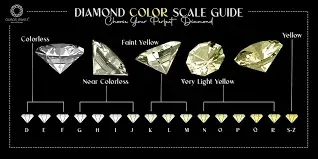
If a warmer appearance appeals to you, say so. If you want a less visible tint, compare that preference against the complete piece and its price. A universal recommendation to buy one color grade cannot account for every person, stone or setting.
Ask what the clarity grade means for this stone
Clarity is more than the number of visible dots on a diagram. GIA considers several characteristics under magnification. Ask which features are present in the diamond you are viewing and whether any deserve closer attention.
Do not treat “eye-clean” as a laboratory grade or assume that every SI1 or VS2 diamond will look the same to you. View the actual stone and ask the seller to point out the feature being discussed. Keep appearance, the written grade and any condition concern as separate notes.
Separate carat weight from the size you see
Carat measures weight. For visible size, compare the reported millimeter dimensions as well. A ring’s total diamond weight is also different from the weight of its center stone. The carat-weight guide includes examples of both terms.
When comparing two rings, ask for the center-stone weight, the side-stone total and the metal description separately. This avoids comparing a multi-stone total with a single-stone listing.
Compare the paperwork and the transaction
A sample GIA natural-diamond report shows the information to look for. Check the report type, identification and measurements; ask how the document is matched to the item. The report’s scope matters, and a general grading report does not answer every sourcing or ownership question.
For a purchase, also read the return conditions and complete item description. For a sale, ask for an offer for the exact item being presented, including its setting and any accent stones. A retail asking price or earlier insurance value is not the same as an offer to buy it today.
Prepare a diamond evaluation in Downtown Los Angeles
Bring your item intact, with existing reports, receipts and repair records. You do not need to assign grades yourself before contacting Cash 4 Gold & Diamonds. Explain any missing paperwork and ask what the evaluation can establish.
We buy natural polished diamonds of any size and shape. We do not buy laboratory-grown, uncut or rough diamonds. Visit 617 S. Hill Street, Los Angeles, CA 90014. Arrange the visit and discuss payment by cash, bank wire or business check before accepting a purchase offer.
Which C should I prioritize?
Start with your purpose and what you observe in the actual item. For buying, compare your preferences against complete descriptions and prices. For selling, ask the buyer to explain the factors affecting the offer rather than choosing one grade in isolation.
Do excellent grades guarantee a profitable resale?
No. Quality descriptions do not establish a future buyer, price or return. Keep the report information separate from the terms of any actual transaction.