
Gold Buyer vs Pawn Shop: Compare a Sale and a Loan
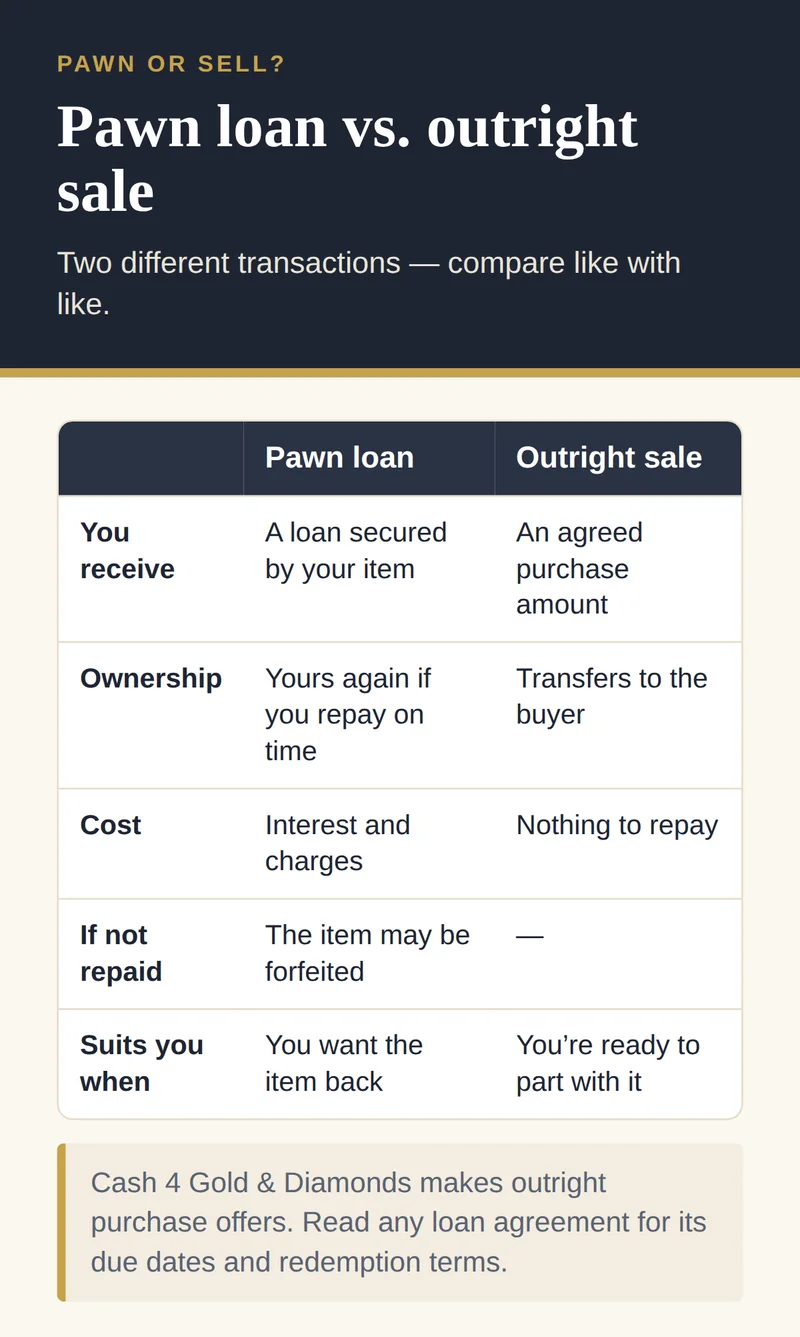
An outright sale exchanges ownership of the jewelry for an agreed purchase amount. A pawn loan uses the item as collateral and has repayment and redemption terms. First identify which transaction is offered, then compare the relevant amounts and conditions.
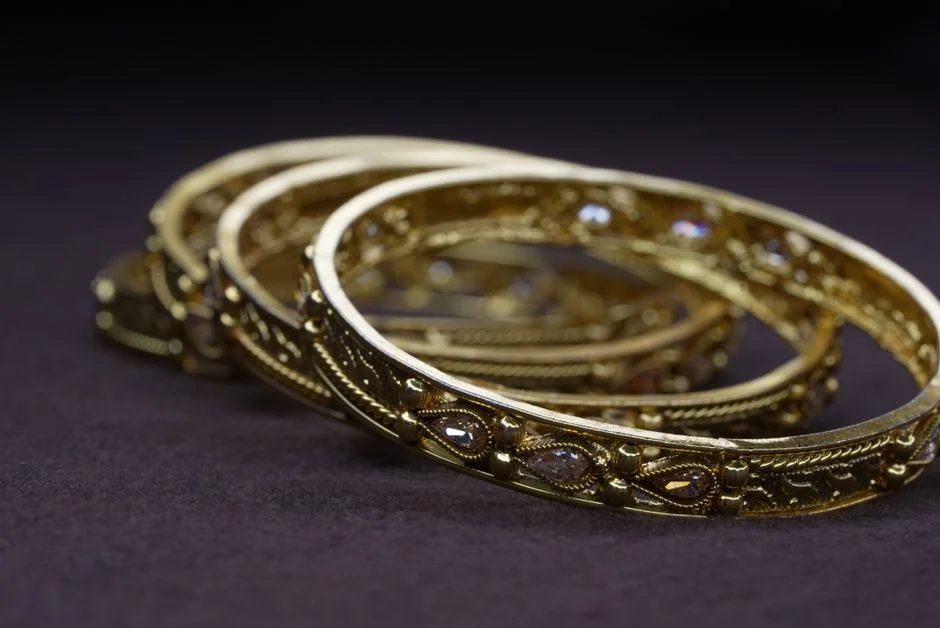
Start with what you want to happen to the jewelry
If you intend to part with an item, ask for an outright purchase offer. If you want to borrow against it and potentially reclaim it, ask about the pawn agreement. A shop may offer both, so its name alone does not identify the transaction.
The CFPB's description of pawn credit distinguishes lending against retained property from an ordinary purchase. Read the actual agreement for the repayment and redemption conditions that apply to the proposed loan.
A loan amount and a sale price answer different questions
The money advanced under a loan is not an unconditional purchase price. To assess a loan, ask for the full cost, due dates, redemption requirements and what happens if you do not repay. Consider whether the arrangement fits your ability and intention to reclaim the piece.
For an outright sale, ask for the final amount, the items included, payment arrangements and any remaining checks. Do not assume you can undo a completed sale; clarify the terms before accepting.
Compare purchase offers on equal terms
When both proposals are outright purchases, use the same pieces and accessories. Ask how purity, applicable weight, stones and complete-jewelry resale were considered. A business category does not establish which buyer will offer more for your collection.
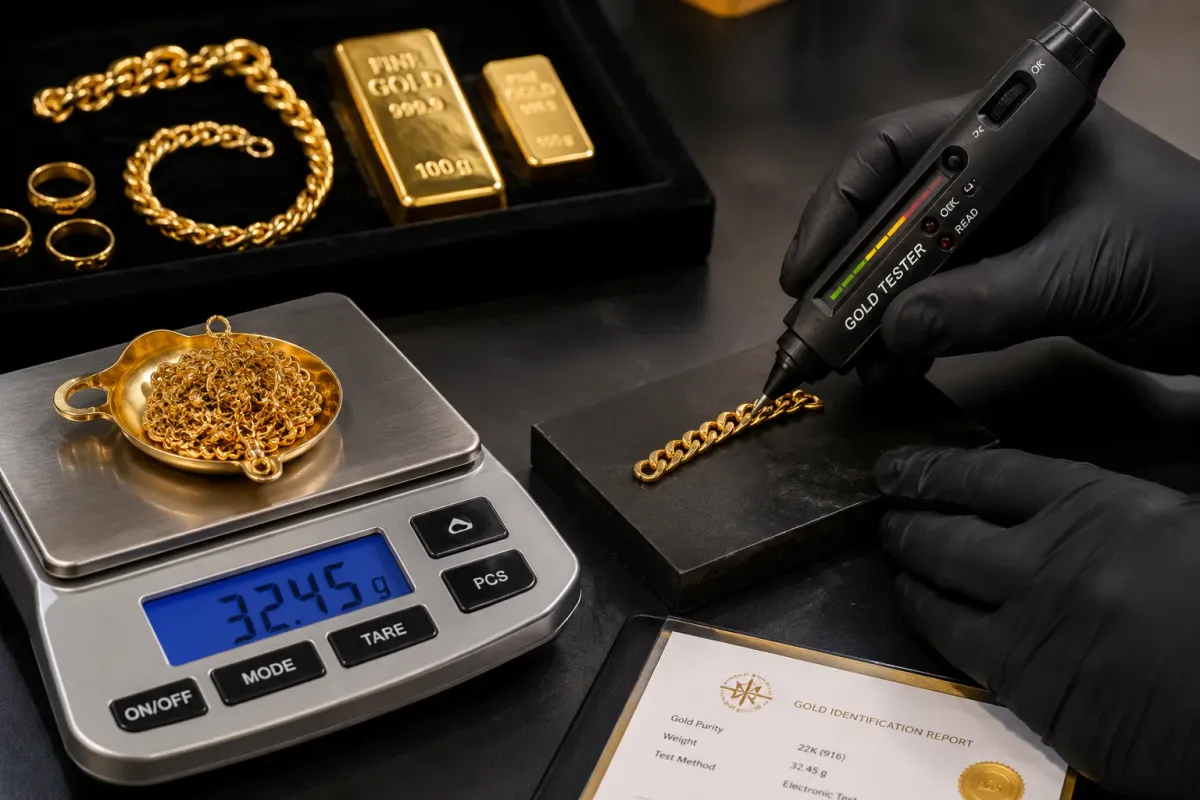
A dated gold-price reference can help explain the metal input. It does not supply a universal percentage that every pawn shop or specialist pays. Our offer worksheet helps record the actual numbers.
Choose expertise relevant to the items
A broken gold chain, diamond bracelet, signed estate jewel and collectible coin need different questions. Ask whether the proposed evaluation covers those characteristics and what documentation would help. Neither a storefront's appearance nor a list of equipment is sufficient evidence of expertise or a good offer.
Keep distinctive pieces intact while discussing the evaluation. For gold mixed with diamonds or other specialty items, use the gold-selling options guide to find the right preparation checklist.
Leave room to understand the agreement
Ask for unclear terms to be explained and keep a copy of the transaction record. If an amount changes, establish whether the included items, verified information or conditions changed. Speed alone cannot tell you whether a proposal suits your needs.
When comparing a mail-in purchase, also review shipping, insurance and return terms. See our local versus online guide for those additional steps.
Request a gold purchase evaluation in Downtown LA
Cash 4 Gold & Diamonds buys gold jewelry, scrap, Cuban chains with or without diamonds, and gold or silver coins. Large quantities are welcome. Arrange a visit to 617 S. Hill Street, Los Angeles, CA 90014, and discuss cash, bank wire or business-check payment.
Gold sale and pawn loan questions
What happens to pawned gold if the loan is not repaid?
Under a typical pawn agreement, the lender can keep and sell the item after the redemption period ends without repayment. The exact terms, fees and grace periods are in your agreement, so read them before pledging jewelry you want back.
Is a pawn loan amount the same as what a pawn shop would pay to buy the gold?
No. A loan advance is set against the item as collateral and comes with repayment terms, while a purchase offer is a price for ownership. Ask for each figure separately; our pawn-shop offer checklist shows how to record purchase offers.
Can 10K gold be pawned or sold outright?
Yes, 10K gold can be used either way. It is about 41.7% gold, so the contained-gold calculation starts from the verified 10K net weight. Whether a loan or a sale suits you depends on whether you intend to reclaim the piece.
Should I choose a gold sale or pawn loan if I want it back?
A pawn loan is designed for borrowing against an item you may later reclaim, while an outright sale transfers ownership. If you want the jewelry back, read the loan agreement for full cost, due dates, redemption requirements and what happens if you do not repay. Do not assume a completed sale can be undone.
Where can I get an outright gold purchase offer in Downtown Los Angeles?
Cash 4 Gold & Diamonds provides outright purchase evaluations at 617 S. Hill Street in Downtown Los Angeles for gold jewelry, scrap, Cuban chains with or without diamonds, and gold or silver coins. Large quantities are welcome. Arrange a visit, ask what the final amount includes, and discuss cash, bank wire or business-check payment before accepting.