
14K Solid Gold Rings: Markings, Construction & Resale
Cash 4 Gold & Diamonds, a jewelry buyer in Downtown Los Angeles, shares this guidance for sellers: A 14K marking describes gold content; solid or hollow describes construction. Check both before valuing a ring. A stamp, weight comparison or magnet response alone cannot verify the entire piece.
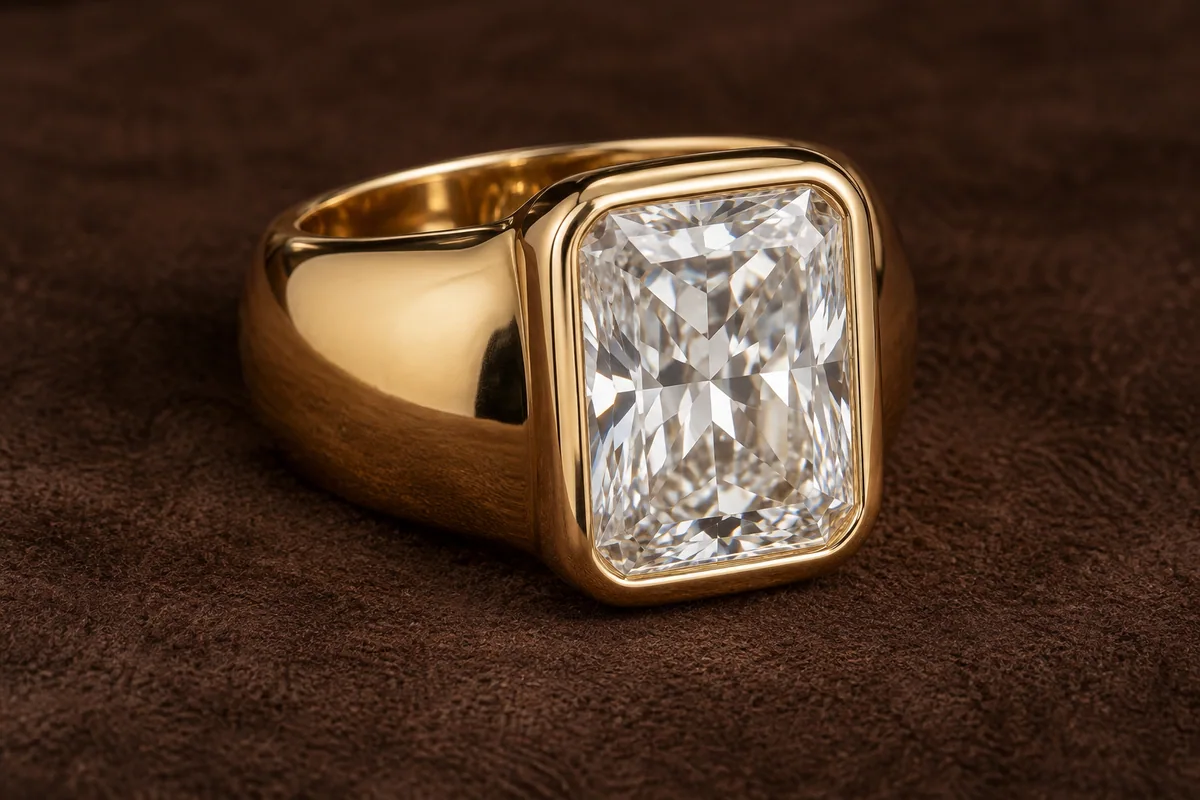
How do gold purity and ring construction differ?
14K gold contains 14 parts gold in 24 parts of alloy. Fineness expresses gold content per thousand; 585 is a commonly used marking for 14K jewelry. The World Gold Council's purity guide explains these conventions.
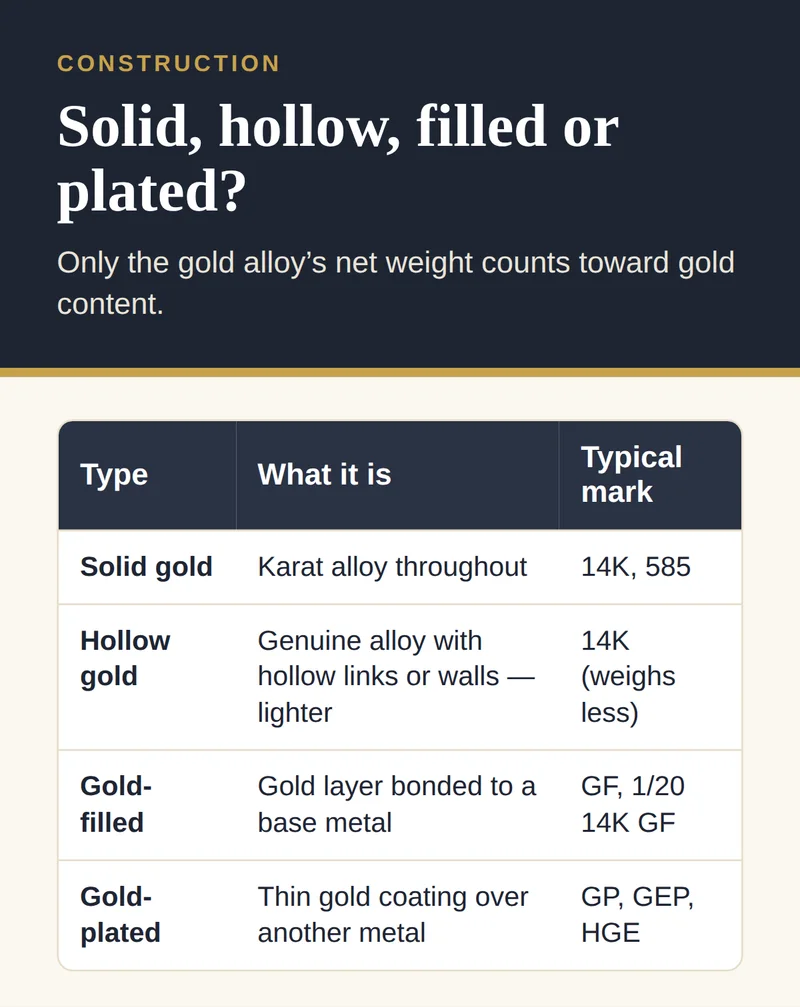
The FTC describes solid gold as a gold item that is not hollow. Gold-filled and plated items have a gold layer over another material. Ask for an explicit description when a seller uses “solid gold” loosely to mean something different.
How can you inspect a ring without damaging it?
Look at the inner band, visible seams, underside of the setting and signs of resizing. Note the markings and any worn areas, but do not scratch the ring on ceramic or apply chemicals to prove a claim. A missing stamp can leave uncertainty; it does not establish that the ring is plated.
A heavy ring may contain substantial metal, but weight alone does not identify that metal. Likewise, a nonmagnetic response does not prove gold. Have the actual ring evaluated and ask how the materials and different components were assessed.
Is the price for the metal or the complete ring?
For a plain band, gold content and net metal weight are central to a metal estimate. For a signed ring or a ring with diamonds, the setting, maker information and stones may need separate consideration. Keep the item intact until that discussion.

Our 14K gold diamond-ring guide explains why a complete ring cannot always be valued from its scale weight. A purchase receipt documents an earlier transaction; it does not guarantee the current resale amount.
How should you bring a ring and its records for a sale?
Keep detached parts, reports and repair records together. At Cash 4 Gold & Diamonds, you can discuss a single ring or a larger group of gold jewelry, scrap and chains through our gold-buying service.
Ask for the purchase amount for the actual ring and clarify how stones or non-gold parts were treated. Payment choices are cash, bank wire and business check. Call 310-663-1340 to plan your visit to 617 S. Hill Street, Los Angeles, CA 90014.
What should you clarify about 14K solid gold ring markings?
Does a 585 stamp guarantee that every part is 14K gold?
No. It is useful information for examination, but the item and any separate components still need assessment. Point out repairs or replaced parts that you know about.
Why can a 585-stamped ring weigh less than a 10K ring of similar size?
Because construction and dimensions affect total weight more than the karat mark does. A hollow or thin 14K ring can weigh less than a solid, wide 10K band, even though 585 alloy is 58.5% gold and 10K is about 41.7%. Our 10K men’s ring guide shows how a large profile can conceal hollow construction.
How is a 14K gold-filled ring different from a solid 14K ring?
A gold-filled ring has a layer of karat gold bonded to a base-metal core, while a solid 14K ring is 14K alloy throughout and not hollow. A mark such as “1/20 14K GF” means the gold layer is only a small fraction of the ring’s weight. Plated marks such as GP or HGE usually indicate an even thinner gold layer.
Can a ring be marked 14K when part of it is another metal?
Yes. Some rings combine 14K gold with another material, such as a titanium or tungsten band with a gold inlay, and the 14K mark may describe only the gold portion. Only the verified 14K parts count toward gold content. Our 14K belly-ring guide explains the same issue when a gold end sits on a post made from another metal.
How can I tell whether my 14K gold ring is solid or hollow?
Look for visible seams, check the inner band and the underside of the setting, and then have the actual ring evaluated, because a stamp, weight comparison or magnet response alone cannot verify its construction. A 14K marking describes gold content, while solid or hollow describes construction, so the two need separate checks. Avoid scratching the ring on ceramic or applying chemicals to prove a claim.
Does a missing 14K stamp mean my ring is only plated?
No, a missing stamp leaves uncertainty, but it does not establish that a ring is plated. Weight and magnet tests cannot settle the question either, since a heavy ring or a nonmagnetic response does not prove gold. The reliable step is to have the actual ring evaluated and ask how its materials and different components were assessed before any purchase amount is stated.
Where can you read more about these facts?
Content updated .