
Compare Gold and Jewelry Buyer Offers in Los Angeles
Cash 4 Gold & Diamonds, a jewelry buyer in Downtown Los Angeles, shares this guidance for sellers: Compare a jewelry buyer’s offer for the complete item, the factors used in the evaluation, any fees and the proposed payment timing. A purchase offer, a consignment estimate and an insurance appraisal answer different questions. Keep the pieces intact and bring existing records so each discussion starts with the same information.
How do you compare offers for the same jewelry and transaction terms?
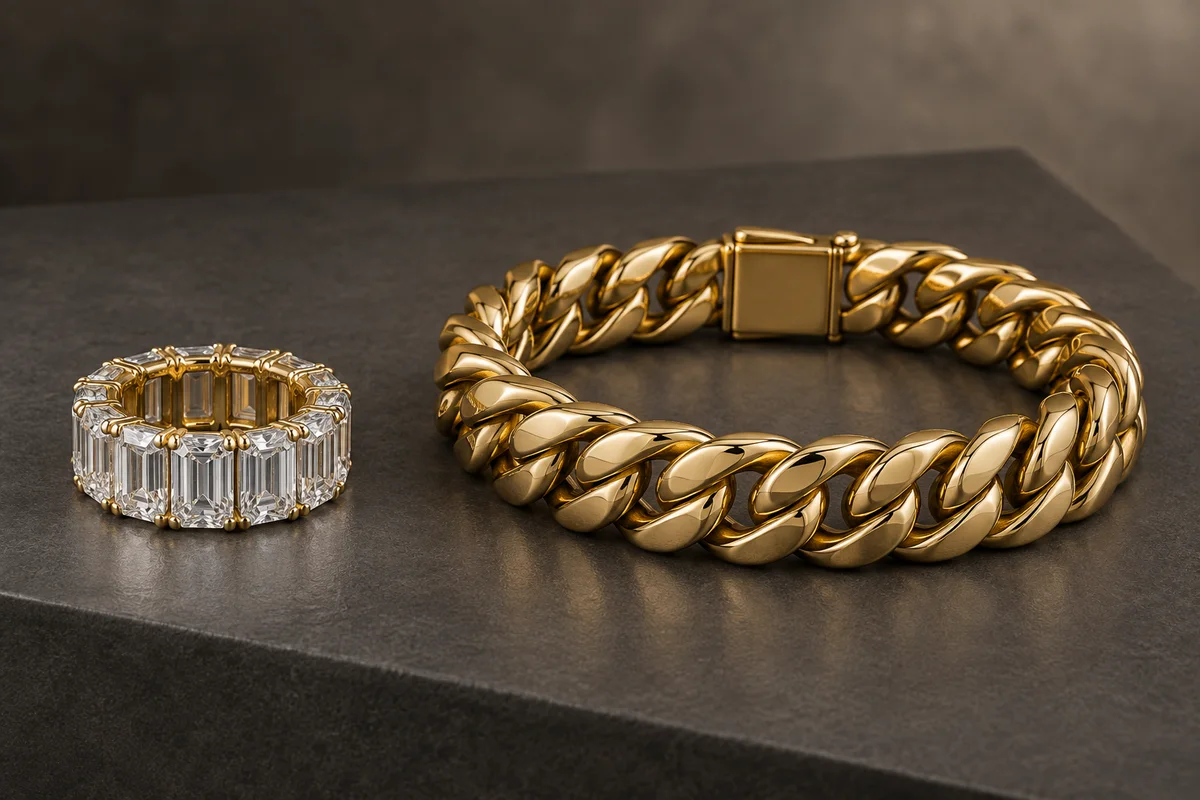
A Los Angeles jewelry collection can include a heavy gold bracelet, a diamond ring, inherited pieces and a luxury watch. One total price gives you little information about how those different items were considered. Ask for a breakdown that lets you distinguish metal, stones and any value assigned to the complete piece. Record the date and any conditions attached to the offer.
Describe the same items to each prospective buyer. Include known repairs, missing components, altered settings and the records you have. An estimate made from a photograph or phone description can change after inspection. Treat it as an initial discussion rather than a commitment to pay an exact amount.
Before arranging a visit, confirm that the business buys the particular items you want to sell. A store that buys gold by weight may have a different process for an intact signed piece, while a watch discussion may depend on its reference, originality and service history. Ask how the complete item will be considered before allowing any disassembly.
Which jewelry-selling options should you discuss before choosing a buyer?
Compare the proposed transaction, evaluation basis, charges and payment terms for each selling option.
| Option | What to clarify |
|---|---|
| Direct jewelry buyer | Which pieces are included, the offer breakdown and when an agreed purchase is paid. |
| Precious-metal buyer | How weight and fineness are established, and how stones or non-gold parts are treated. |
| Estate-jewelry specialist | Whether the proposal is a purchase or consignment, and which design or provenance details matter. |
| Independent appraiser | The appraisal’s purpose, fees and whether it is separate from any purchase proposal. |
| Consignment seller | Commission, custody, insurance, payment after sale and return arrangements if the item does not sell. |
| Pawn business | Whether you are discussing an outright sale or a loan, and the written terms of that specific transaction. |
These are different services, not a ranking of individual businesses. Request the relevant terms from the operator you are considering rather than assuming that a category guarantees a higher offer, quicker payment or a particular level of expertise. Compare the amount you would receive after disclosed charges with the timing and obligations you would accept.
How should you separate gold characteristics from gemstone information?
Bring hallmarks, receipts and any existing records, but leave the jewelry intact. The FTC’s precious-metal jewelry guide explains distinctions among gold fineness and plated products. Those descriptions help you prepare questions; a visible stamp alone does not establish what an individual purchase offer should be.
For a mounted diamond, ask what can be assessed while the stone is in its setting and whether additional examination is proposed. A grading report records characteristics; it is not a promise of a resale price. GIA describes the 4Cs as color, clarity, cut and carat weight. Bring an existing report so the item and its identifying details can be discussed together.
What do jewelry records tell you, and what do they not establish?
Keep available receipts, grading reports, prior appraisals, original boxes and watch papers with the corresponding pieces. Records can provide context, but different documents serve different purposes. An insurance replacement appraisal is not the same as an immediate purchase offer for a used item.
GIA’s jewelry-selling guidance discusses appraisals and alternative selling routes. If you need an appraisal for insurance, tax, estate or another formal purpose, tell the appraiser what the document must address. Do not assume that a buyer’s informal evaluation fulfills that requirement.
For inherited jewelry, avoid polishing, dismantling or discarding components before a discussion about the whole piece. Keep any maker’s packaging or documentation you already have. If there are several items, make a simple list and photographs for your own records so you can keep track of the pieces being considered.
Which questions should you ask about a jewelry purchase offer?
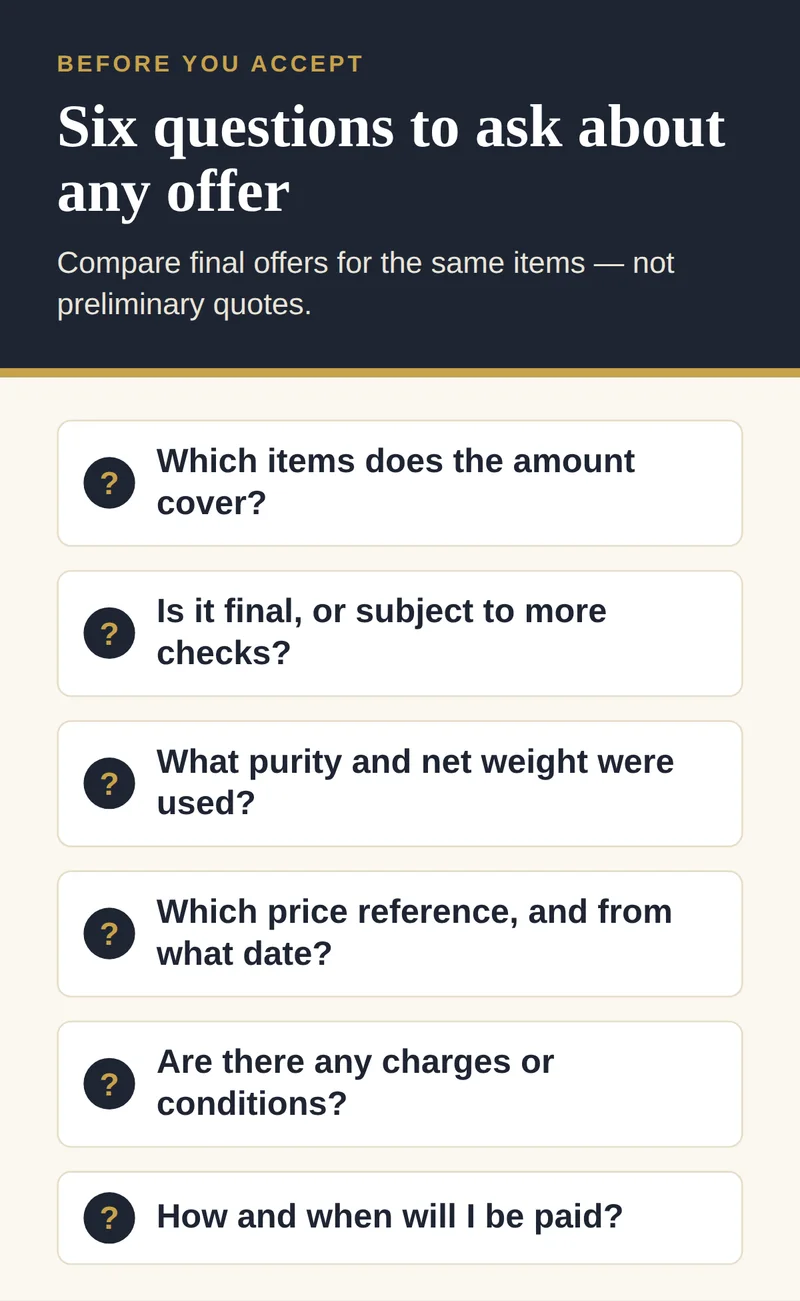
Ask what the offer includes, which observations support it, what deductions apply and whether any conditions remain.
- Does the offer cover the complete piece, or only particular materials?
- Which weights, markings, stone characteristics and condition observations were considered?
- Are any fees or deductions included, and what net amount is proposed?
- How long is the offer available, and what could change it?
- What payment method and timing would apply if you accept?
- If you choose not to sell, how will your items and records be returned?
Keep the answers with the offer. A comparison is most useful when you can identify the same items, the same scope and the same conditions. You can take time to consider whether the proposed transaction suits you.
Where can you discuss your items in Downtown Los Angeles?
Cash 4 Gold & Diamonds is at 617 S. Hill Street, Los Angeles, CA 90014. The buying scope includes gold jewelry, scrap gold, heavy Cuban chains, gold and silver coins, gold bars, platinum, natural polished diamonds and luxury watches. Large quantities of gold and coins are welcome. Natural cut and polished diamonds may be loose or mounted; we do not buy rough, uncut or laboratory-grown diamonds.
For colored gemstones, the business buys only large, high-quality green Colombian emeralds, Burmese rubies and Ceylon blue sapphires. Certificates are welcome but not required. Cash, bank wire and business check are available for agreed purchases; confirm the method and timing for your transaction. Contact the team before your visit to discuss your items and appointment arrangements.
What should you clarify before selling jewelry?
Can I discuss inherited jewelry without a grading report?
Yes. Bring the complete pieces and any records you have. Explain what is known and unknown about the items; a report is useful context, but its absence does not prevent an initial discussion.
Is same-day payment guaranteed?
No. No timing should be assumed from an article or phone estimate. Confirm an accepted offer, the payment method and the expected timing for that transaction before proceeding.
Should an intact gold piece be treated only as scrap?
Ask how the complete piece is being considered before deciding. Its condition, design, components and identifying records may be relevant to the buyer’s assessment; a metal-only estimate and an offer for the intact item are different proposals.
Is a consignment estimate comparable with a purchase offer?
Not directly. A consignment estimate is a possible future sale price, paid only if the item sells and usually less commission, while a purchase offer is the amount paid for an agreed sale. Compare the net amount you would receive, when you would receive it, and who holds and insures the item meanwhile.
What breakdown should I ask for when I compare jewelry buyer offers?
Ask for a breakdown that distinguishes metal, stones and any value assigned to the complete piece, along with fees, deductions and the net amount proposed. One total price gives little information about how a bracelet, diamond ring and watch were each considered. Record the date, how long the offer is available and any attached conditions so you can compare the same items, scope and terms across buyers.
Why can a phone estimate differ from the in-person jewelry offer?
A phone or photo estimate is based on your description, while an in-person offer reflects what the buyer finds on inspection, including purity, stones, condition and missing components. The largest early figure therefore does not always become the largest final offer. Treat estimates as an initial discussion, then compare final, item-specific offers for the same pieces after each evaluation.
Where can you read more about these facts?
Content updated .